• Home
  • About
  • Swim Lessons
    • Kids Swimming Lessons
    • Teenagers Swimming Lessons
    • Adult Swimming Lessons
    • Stroke Improvement Lessons
  • Blog
  • Contact
214-893-0078 Summer 2027 DFW Waitlist
×
  • HOME
  • ABOUT
  • SWIM LESSONS
    • Kids Swim Lessons
    • Teenagers Swim Lessons
    • Adult Swim Lessons
    • Stroke Improvement Lessons
  • Blog
  • Contact
  • Swim Guarantee
  • Gallery
  • Why Choose Us
  • Our Instructor
  • Water Safety
  • Locations
    • Rowlett
    • Rockwall
    • Wylie
    • Dallas
    • Garland
    • Richardson
    • Plano
    • Murphy
    • Sachse
    • Mesquite
    • Rockwall County
    • Fate
    • Sunnyvale
    • Bryan/College Station
  • Faq
  • Partnership Opportunities

Enquire Now

    Blog Details

    How to Float in Water: A Step-by-Step Guide for Kids, Teens and Adults

    16 Nov 2026 Swim Lessons
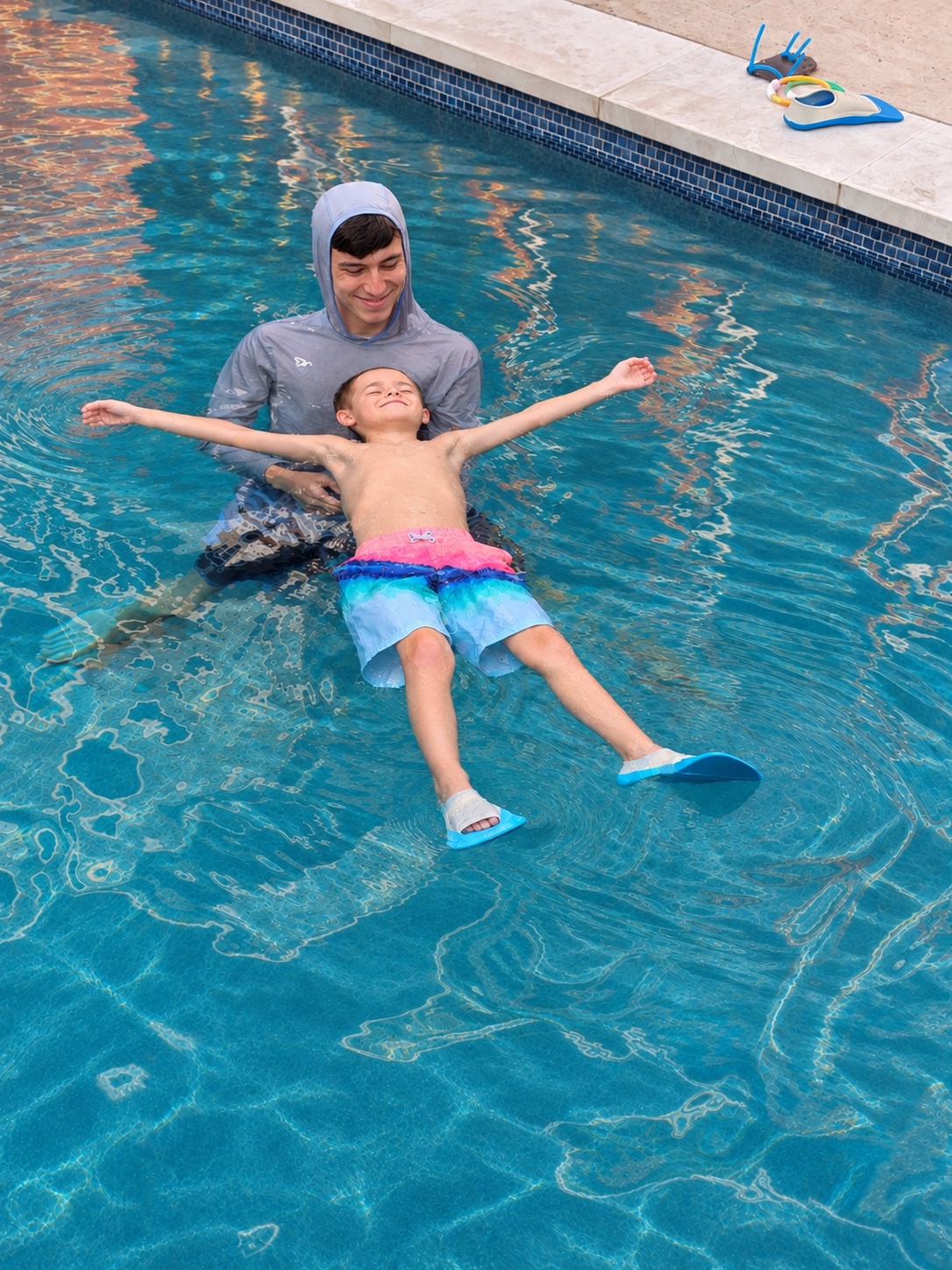
    Instructor Ethan Chapa supports a smiling boy in a back float with arms spread wide

    Most people can learn to float. Floating isn’t a gift some people are born with. It’s a skill made of three things: air in your lungs, your head back, and a relaxed body. When people say “I just sink,” it’s almost always tension, a lifted head or shallow breathing, not their body.

    At Waterview Swim School, floating is one of the first things we teach, because it changes everything. Once a swimmer knows the water will hold them up, the fear drops and the swimming comes faster.

    Instructor Ethan Chapa supports a smiling boy in a back float with arms spread wide

    Afraid you’ll sink? Let’s prove you won’t. Private 50-minute lessons for adults and kids 5+ at our heated pool in Rowlett.

    Join the Summer 2027 DFW Waitlist

    TL;DR

    • Air floats you. A full breath acts like a built-in life jacket in your chest.
    • Head back, ears in, belly up. Lifting your head to look around is the #1 reason people sink.
    • Legs sinking is normal. Your chest has air in it and your legs don’t. A float with your legs a little lower still counts.
    • Relax. A tense body sinks; a loose body floats. That’s why fear is the real obstacle.
    • Floating is a safety skill. The American Red Cross lists “float or tread water for one minute” as one of five skills that could save your life in the water.

    Table of contents

    1. Why some people float and some sink
    2. How to do a back float, step by step
    3. The front float (and why it matters)
    4. Common mistakes and quick fixes
    5. Floating for kids, teens and adults
    6. Why floating is a safety skill
    7. How Waterview teaches floating
    8. FAQ
    9. Sources

    Why some people float and some sink

    Your body is close to the same density as water, so small things decide whether you bob or sink:

    • Air in your lungs. A full breath adds volume without adding weight. Breathe out all the way and you’ll drop a few inches. Take a big breath and you rise.
    • Muscle and bone vs. fat. Muscle and bone are denser than water. Fat is lighter. Very lean, muscular people (including many athletic teens and men) often find floating harder.
    • Where the weight is. Your chest holds air; your legs don’t. That’s why legs tend to drift down even when the rest of you floats.

    The good news: technique moves your balance point. Arms overhead, head back and hips up can turn a “sinker” into a floater, or at least a slanted floater who can still breathe easily.

    How to do a back float, step by step

    Start in water where you can stand, with an instructor or a trusted adult right next to you.

    1. Stand with the water at chest height. Shoulders under the water, so you feel it holding you.
    2. Take a big, slow breath and keep your lungs mostly full. Breathe in and out in small sips instead of long exhales.
    3. Lay your head back until your ears are underwater and your eyes look straight up at the sky or ceiling. Water in your ears is normal and okay.
    4. Push your belly button up toward the sky. This lifts your hips.
    5. Spread your arms out like a “T,” or reach them past your head for more balance.
    6. Let your feet float up slowly. Don’t kick. Let them come up on their own, even if they stay a little low.
    7. Relax and count. Start with 5 seconds, then 10, then work toward a full minute.
    8. To stand up: tuck your chin, bring your knees toward your chest, sweep your arms forward, and put your feet down.

    Tip: if your legs keep sinking, bend your knees a little or move your arms higher above your head. Both shift your balance toward your feet.

    The front float (and why it matters)

    The front float (face in the water, arms and legs spread like a starfish) teaches swimmers that the water holds them even face-down. It’s the starting position for freestyle.

    1. Take a big breath and hold it.
    2. Put your face in the water and look at the bottom.
    3. Reach your arms forward and let your feet lift off.
    4. Float for 3–5 seconds, then stand up: knees in, push down with your arms, lift your head.

    Many kids and nervous adults find the front float scarier than the back float because their face is in the water. That’s fine. Practice blowing bubbles first.

    Common mistakes and quick fixes

    What happens Why Fix
    Sinking right away Head lifted to look at feet Ears in, eyes straight up
    Hips fold like a “V” Sitting down in the water Push belly button up
    Sink after a few seconds Breathed all the way out Small sips of air, keep lungs mostly full
    Legs drop Normal for lean or muscular bodies Arms overhead, slight knee bend
    Stiff and shaky Fear and tension Shorter tries with a hand under your back
    Panicked to stand Doesn’t know how to recover Practice the stand-up move first

    Floating for kids, teens and adults

    Kids (ages 5 and up)

    Kids often float more easily than adults. The hard part is trust. Lying back with ears underwater feels scary at first. We start with a hand under the back and shoulders, make it a game (be a starfish, be a pancake, count to 10), and take the hand away a little at a time. The American Academy of Pediatrics notes that back floating is one of the basic water survival skills children should learn. See our kids swimming lessons.

    Teens

    Athletic teens, especially boys, are often surprised that they’re “sinkers.” Lean, muscular bodies float lower. Teens usually need a few technique fixes (arms overhead, hips up) rather than more confidence. Once they get it, a back float becomes the rest position they use in deep water. See our teen swimming lessons.

    Adults

    For adults, floating is usually the turning point. Many adults who can’t swim have never trusted the water to hold them, so they fight it, and fighting makes them sink. When an adult relaxes into their first real float, the whole lesson changes. That’s a big reason many Waterview adults are swimming by their second lesson.

    Never learned to float? Start here. Private adult lessons in Rowlett. No audience, no pressure.

    Join the Waitlist

    Why floating is a safety skill

    Floating isn’t just for relaxing in the pool. It’s how you rest, breathe and wait for help if you’re tired or in trouble. The American Red Cross lists five skills that could save your life in the water:

    1. Step or jump into water over your head
    2. Return to the surface and float or tread water for one minute
    3. Turn around in a full circle and find an exit
    4. Swim 25 yards to the exit without stopping
    5. Get out of the water

    A swimmer who can float can always stop, breathe and think. A swimmer who can’t float has to keep moving, and tired swimmers panic.

    Floating is a skill, not a safety device. Children who can float still need an adult watching them, close and undistracted, every time they’re in or near water.

    How Waterview teaches floating

    • Warm water first. Our Rowlett pool is heated, and we require at least 88°F at any pool we teach in. Cold water makes bodies tense, and tense bodies sink.
    • A shallow area to stand. Every floating lesson starts where the swimmer can put their feet down.
    • One-on-one support. In a private lesson, the instructor’s hands stay right there until the swimmer is ready, and come back the moment they need it.
    • Floating before strokes. Once a swimmer trusts the float, breathing and kicking come much easier.
    • Part of the Guarantee to Swim. Floating is one of the building blocks toward our goal: swimming unassisted back to the pool edge within 12 lessons, or 2 more lessons free.

    Details: $65 per 50-minute private lesson. The $50 registration fee per swimmer (maximum $100 per family) is waived when you prepay the 12-lesson package. All Dallas-area lessons are at our private, heated pool in Rowlett, TX, during summer 2027 (late May to mid-August), Monday–Saturday 9 AM–7 PM by appointment. In Bryan/College Station, we teach private lessons in the fall and spring.

    Questions about learning to float? Call Waterview Swim School at 214-893-0078.

    Call Waterview

    FAQ

    Can everyone float?
    Most people can, with the right technique. Some very lean or muscular people float lower, with their legs angled down, but they can still learn to float well enough to breathe and rest. People who truly can’t float still have treading water as a backup.

    Why do my legs sink when I float on my back?
    Your chest has air in it and your legs don’t, so your legs are heavier for their size. Reach your arms above your head and push your hips up to balance it out.

    How long should I be able to float?
    Start with 5–10 seconds. The American Red Cross skill to aim for is floating or treading water for one minute.

    Is it easier to float in salt water?
    Yes. Salt water is denser, so it pushes up harder. If you can float in a pool, you’ll float even more easily in the ocean.

    My child panics when lying back. What should I do?
    Don’t force it. Short tries with a hand under their back, a game and lots of praise work better than pushing. In private lessons, we go at the child’s pace.

    How many lessons does it take to learn to float?
    Many swimmers float within their first few lessons. It depends on how relaxed they are in the water. See our guide on how many lessons it takes to learn to swim.

    Sources

    • American Red Cross, 5 Skills to Save Your Life in the Water
    • American Academy of Pediatrics (HealthyChildren.org), Swim Lessons: When to Start & What Parents Should Know
    How Many Swim Lessons Does It Take to Learn to Swim? How Many Swim Lessons Does It Take to Learn to Swim?
    Adult Swim Lessons in College Station and Bryan, TX: Private, One-on-One, Guaranteed Adult Swim Lessons in College Station and Bryan, TX: Private, One-on-One, Guaranteed

    Categories

    • Great Students
    • Sally & Max's Adventures
    • Swim Lessons
    • Water Safety

    Recent Posts

    Fear of Swimming: Why It Happens and How to Get Past It
    Fear of Swimming: Why It Happens and How to Get Past It
    16 Nov 2026
    Adult Swim Lessons in College Station and Bryan, TX: Private, One-on-One, Guaranteed
    Adult Swim Lessons in College Station and Bryan, TX: Private, One-on-One, Guaranteed
    16 Nov 2026
    How Many Swim Lessons Does It Take to Learn to Swim?
    How Many Swim Lessons Does It Take to Learn to Swim?
    16 Nov 2026

    At Waterview Swim School, we believe that every swimmer is unique and needs a customized training approach. Once you are paired with one of our expert swim teachers, you have the freedom to create your own pace, choose the most convenient time and define goals you want to achieve. We ensure that each private swim class is tailored to address your swimmer’s specific needs, strengths and challenges.

    Quick Links

      • Home
      • About
      • Adult Swim lessons
      • Swim Guarantee
      • Why Choose Us
      • Water Safety
      • Gallery
      • Blog
      • Contact Us

    Contact Details

    9505 Fairway Vista Drive, Rowlett, Texas 75089, United States

    Call Us Today

    Mon-Sat - By Appointment

    214-893-0078

    Mail Us

    Contact@WaterviewSwim.com

    Copyright © 2026 Waterview Swim - All Rights Reserved. | Terms of Service

    Developed & Marketed By Digital Piloto